The Quantum Threat to Encryption
Quantum computers are advancing rapidly. When they become powerful enough, they could break the encryption that protects our digital world.
Understanding the Problem
How Current Encryption Works
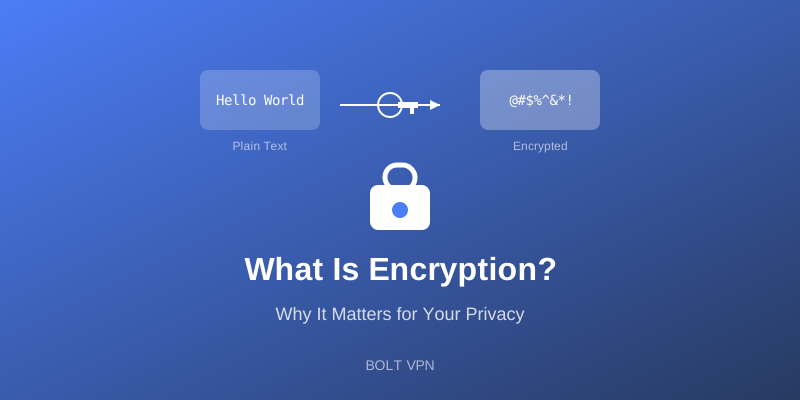
Today's encryption relies on mathematical problems that are extremely hard for regular computers to solve.
Why Quantum Computers Are Different
Quantum computers use quantum mechanics to solve certain problems exponentially faster than classical computers.
What's at Risk
- VPN encryption
- Banking security
- Secure communications
- Digital signatures
- Stored encrypted data
Post-Quantum Cryptography (PQC)
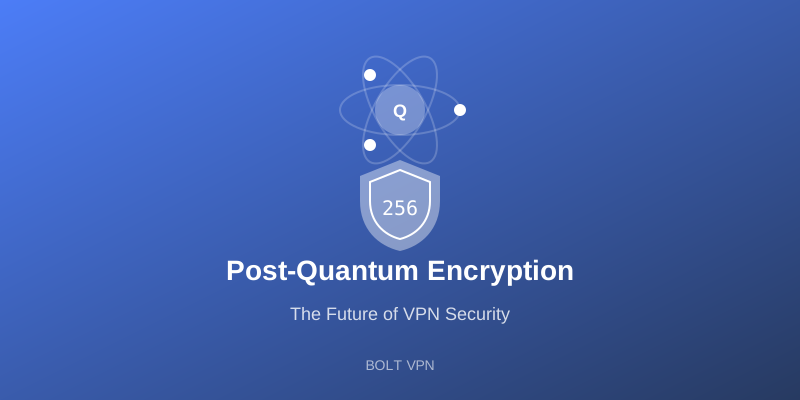
Post-quantum cryptography uses algorithms designed to resist attacks from both classical and quantum computers.
Leading PQC Algorithms
- CRYSTALS-Kyber - For key exchange
- CRYSTALS-Dilithium - For digital signatures
- SPHINCS+ - Alternative signature algorithm
The Timeline
Experts estimate cryptographically relevant quantum computers could exist within 10-15 years. However, "harvest now, decrypt later" attacks mean we need to act now.
How VPNs Are Preparing
Leading VPN providers are already implementing hybrid encryption that combines classical and post-quantum algorithms.
Current Status
- Research and testing ongoing
- Early implementations appearing in 2025-2026
- Full transition expected by 2030
What This Means for You
Today
Current VPN encryption remains secure. Use a VPN that stays updated with the latest security developments.
Tomorrow
Look for VPNs that adopt post-quantum encryption as it becomes available.
Bolt VPN's Commitment
At Bolt VPN, we're committed to staying ahead of security threats. We're actively researching and testing post-quantum solutions to ensure your data remains protected, now and in the future.
Stay protected today and tomorrow with Bolt VPN.